Melvor Idle 2 is worth buying in Early Access if you enjoy checking in on an idle RPG, picking your next upgrade, and letting the current task run while you do something else. The sequel keeps the original’s offline progression and gives you more reasons to switch skills, with reworked mastery, story quests, and more involved combat preparation. If you mainly want an endgame as extensive as the original’s, waiting for more content is the better choice.
What the first few sessions feel like
You choose a skill or fight from a menu, set an action, and check back when you’re ready to make another decision. Woodcutting is a good example because it gives you experience and materials that you can put toward another skill. The current action display shows hourly rates, so you can see how quickly a task is earning experience or using up supplies.
The fishing-to-combat route shows how offline progress fits into that routine. Leave Fishing running while you’re away, cook the catch when you return, and use the food to heal during combat. You can check a monster’s drops before choosing a fight, which gives you a reason to stock up on food and pick a specific enemy. For a first session, try following one chain like this so you can see how gathering and crafting pay off in battle.
What changed from the original Melvor Idle
The reworked mastery system rewards working with a wider range of items within a skill, giving you a reason to revisit recipes or resources you might otherwise leave behind. Story quests give you shorter-term goals as you meet their requirements, which can help you decide what to train next. Dedicated skill loadouts also make it easier to move between activities when each benefits from different equipment.
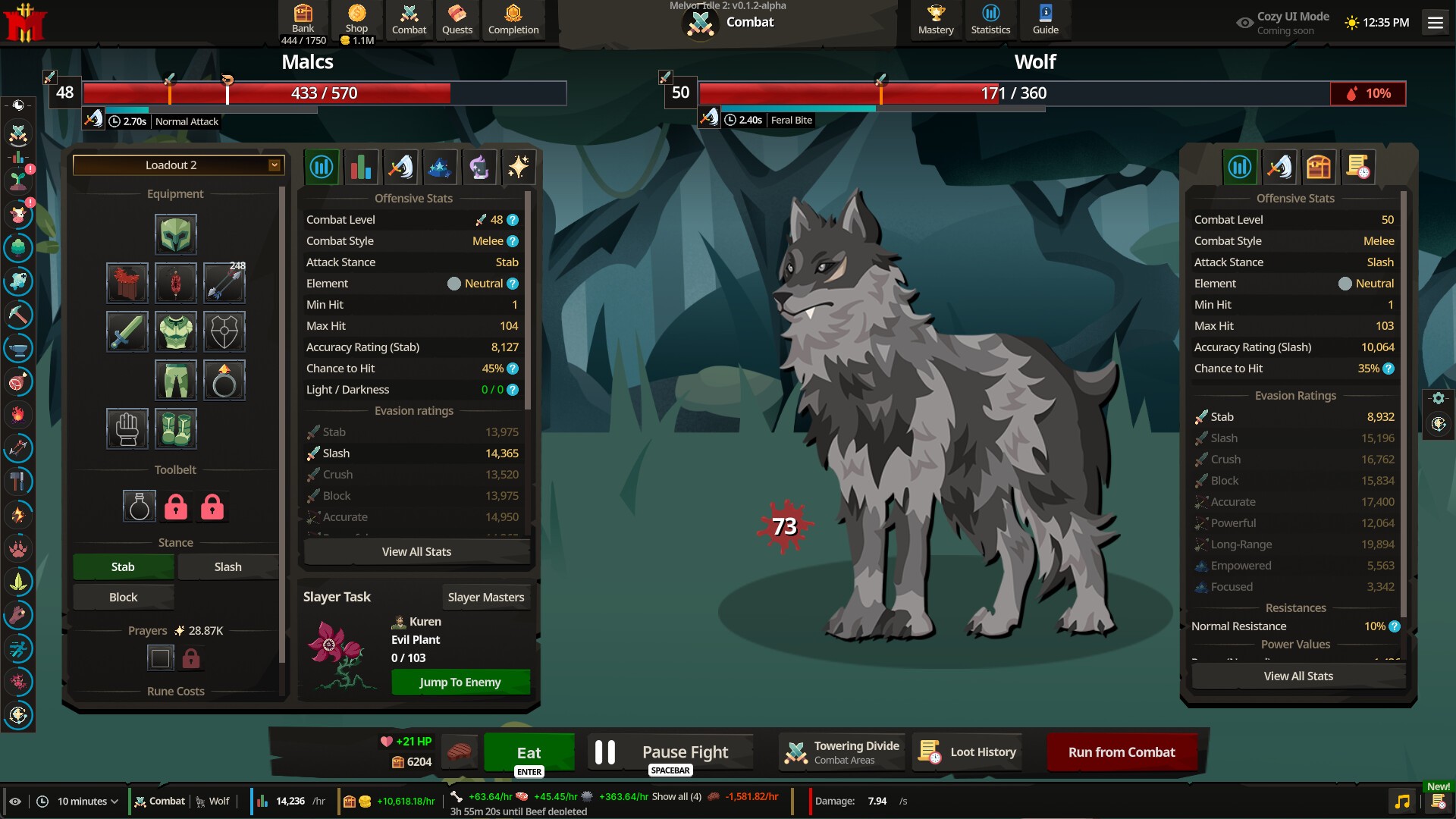
Combat still plays out automatically once you choose an enemy, so much of the strategy happens before the fight. You decide what gear to bring, whether to train melee, ranged, or magic, and how much food to keep on hand. The sequel also refreshes the interface, adds more activity animation, and offers a dark mode, though returning players may need time to learn where things moved.
Where the grind and Early Access show
A single gathering task can run while you’re offline, but a chain of crafting requirements can take several check-ins as you switch between skills. Keeping enough food for combat or waiting for specific drops such as farming seeds can also slow you down. If you like short sessions, work through the steps that need your attention while you’re online and leave a longer gathering task running when you step away.
The developers describe an Early Access build that already includes much of the game’s core, with some skills, combat content, and quality-of-life features still to come. Early feedback described the endgame as thinner than the original’s after years of updates and expansions, although the first-impressions reviewer had yet to reach it. The developers estimated that completing planned content could take 12 to 18 months.
Is Melvor Idle 2 worth buying now?
The base game launched on Steam at $14.99 in the US as a one-time purchase with no microtransactions. The developers said they planned to keep the base price the same at full release, so waiting for more content needn’t mean paying a higher list price. The strongest reason to buy now is that you already enjoy the loop of setting a goal, stepping away, and coming back to put those gains to work.
If you liked RuneScape for skilling and working toward the next unlock, that rhythm carries over to a single-player game you can fit around your day. You can start without knowing RuneScape lore or having played the first Melvor Idle. If you already own the original and mainly want more late-game goals, stick with it for now and revisit the sequel as Early Access adds content.